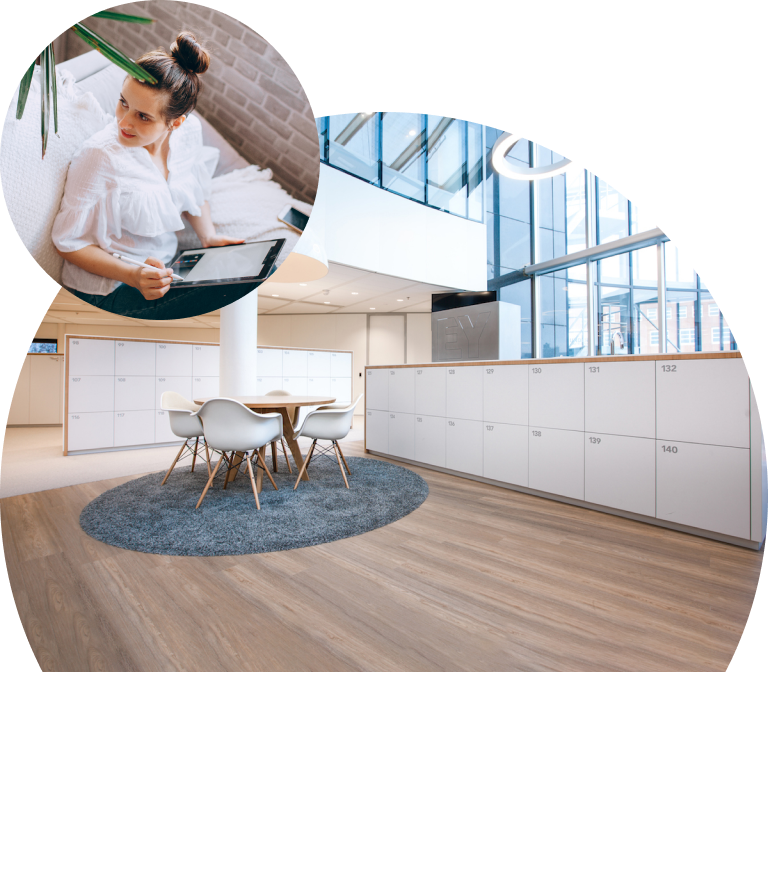
Today’s workplaces are dynamic - hybrid schedules, project-based teams, visitors, and shifting priorities. Yet many environments are still built on rigid rules: fixed desks, fixed zones, fixed storage, fixed access.
When reality changes but the workplace doesn’t, people work around the system instead of with it.
Work patterns change constantly. Adaptive workplaces are designed to accommodate that.
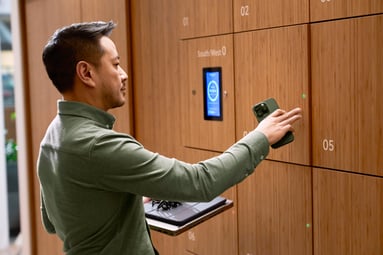
1. Design for people, not policies
The biggest shift in modern workplace design is moving from policy-first to people-first.
Instead of asking how much space to assign, ask how people actually use the workplace.
How often are they here, and what do they need on a given day?
People don’t fit into fixed categories.
People don’t fit into fixed categories.
Some come in every day. Others occasionally. Some need a space for an hour, others for weeks. A workplace designed around rigid rules struggles to support that range.
An adaptive workplace accommodates it naturally - without exceptions or manual workarounds.
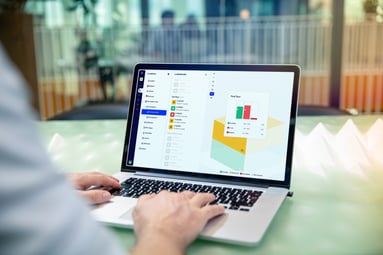
2. Build flexibility into the infrastructure, not on top of it
In adaptive workplaces, flexibility is part of the underlying setup.
-
Access adjusts automatically.
-
Spaces support multiple use cases without reconfiguration.
-
Systems respond as usage changes.
This is easy to see in day‑to‑day workplace infrastructure. Storage, for example.
In many offices, storage is treated as a fixed resource - which works for predictable use, but less so when attendance, teams, and needs change.
In an adaptive workplace, storage is treated as a shared, flexible part of the infrastructure. The same lockers can support different use cases over time, with access adjusting automatically based on need. Storage availability follows actual usage, rather than static assignments. This approach reduces the need for reassignment, exceptions, or manual coordination.
Applied across the workplace, this allows spaces to adjust as work patterns change - without adding complexity for the people using them or the teams managing them.
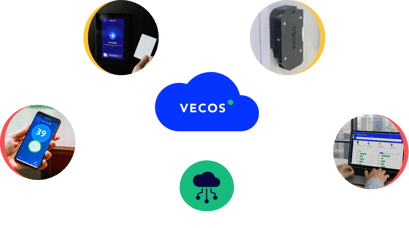
3. Make the experience obvious, the technology invisible
When designing an adaptive workplace, the experience people have matters more than the systems behind it.
People should be able to walk in, get what they need, and continue with their day - without instructions, tickets, or figuring out who to contact.
That requires technology that supports usage without demanding attention.
No extra steps.
No decisions users shouldn’t have to make.
In practice, this means:
- people are recognized automatically
- access and permissions are applied consistently
- experiences adjust based on context, not manual input
Employees experience an intuitive workplace.
Facilities teams retain control.
.png?width=377&height=212&name=Every%20locker.%20Every%20use.%20(1).png)
4. Design for multiple use cases on the same space
Many workplace inefficiencies come from spaces designed for a single purpose.
When usage changes, those spaces sit idle, require reconfiguration, or only work under specific conditions.
Adaptive workplaces take a different approach.
Spaces are designed to support different needs at different moments - without needing to be redesigned each time.
Workplace storage is a clear example of this. In traditional setups, lockers are often assigned for one use and remain unused much of the time.
With the Vecos adaptive locker system, the same lockers can support personal use one day and shared or short‑term use the next, adjusting as demand changes.
When spaces - and the systems that support them - are designed for multiple use cases, workplaces use fewer resources and get more value from the space they already have.
.png?width=408&height=243&name=FM%20End%20of%20page%20solutions%20(1).png)
5. Keep Facilities in control - without the busywork
Adaptivity doesn’t mean less control.
It means applying control differently.
In traditional workplaces, control often depends on manual effort - tracking usage, resetting space, resolving issues as they come up. As workplaces become more dynamic, that approach quickly becomes hard to manage.
In an adaptive workplace, Facilities sets the rules once - and systems apply them consistently:
- Allocation happens automatically
- Turnover is managed in the background
- Availability stays up to date
- Compliance is built in
In adaptive workplaces, facilities teams have real‑time visibility into how the workplace is used.
Decisions are based on actual data rather than assumptions.
This allows Facilities to stay in control as the workplace changes - without being pulled into day‑to‑day friction.
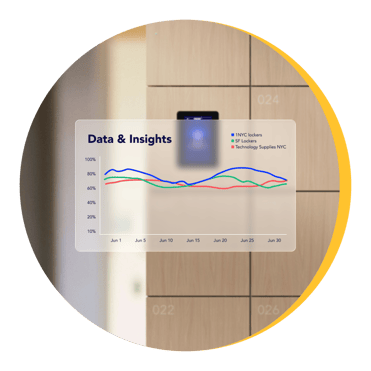
6. Use data to improve, not just report
Modern workplaces generate a lot of data.
Most of it ends up on dashboards, not in decisions.
In an adaptive workplace, data is not just a dashboard – it is used to inform what happens next.
- which spaces are used
- which remain idle
- how patterns shift over time
- where demand is increasing or declining
This insight allows workplace teams to adjust space allocation, improve the day‑to‑day experience, reduce underused resources, and plan ahead with more confidence.
The result is a workplace that gets better over time - because decisions are based on real behaviour, not assumptions made during design.

7. Design for today - and for what comes next
Work patterns will continue to change.
Technology will evolve.
A workplace designed around fixed behaviour quickly becomes limiting. An adaptive workplace is designed handle changes within the existing setup.
That means choosing:
- Systems that update instead of being replaced
- Platforms that integrate instead of operate in isolation
- Infrastructure that can expand without disruption
In practice, the most resilient workplaces are the ones that can adapt to change using what’s already in place.
What an adaptive workplace really delivers
When these principles are applied together, the effects are tangible.
For employees:
- Less friction in daily work
- More flexibility in where and how they work
- A workplace that adapts to their needs, day by day
For Facilities and workplace teams:
- Control without constant intervention
- Better use of space and resources
- Confidence as the workplace evolves
The result is a workplace that can adjust day to day, using the systems already in place - without relying on workarounds or repeated redesign.