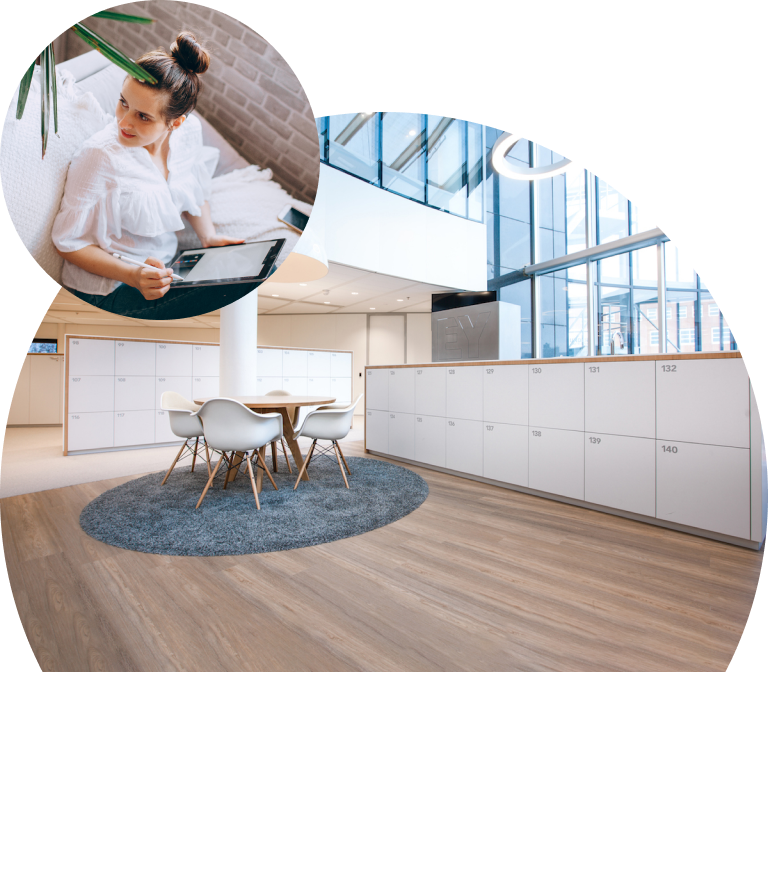
When organizations move to hybrid working, storage is usually one of the first things to break. People aren’t at the same desk or using the same locker anymore, and fixed assignments quickly create friction - empty lockers on quiet days, shortages on busy ones, and a lot of admin overhead.
Smart lockers improve this. They replace keys and static assignments with software, giving employees digital access and admins centralized control. Availability increases, and management becomes easier.
But there’s a catch: smart lockers still rely on preset rules - who can use which locker, for how long, and under what conditions. As work patterns keep changing, those rules need constant updating.
That’s where Adaptive Workplace Storage comes in.
Instead of forcing people to fit the system, the system adapts to real usage - adjusting access, duration, and availability automatically, day by day.
The result: storage that stays flexible, fair, and friction-free- even as work habits evolve.
In this guide, we explain how Smart Lockers work and how Adaptive Workplace Lockers take workplace storage further - adjusting automatically to real usage, not fixed assumptions.
So how does Adaptive Workplace Lockers work?
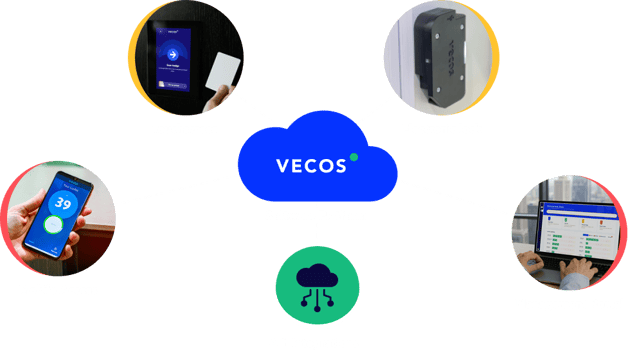
1. Smart lockers (Hardware)
Adaptive lockers are electronic locker cabinets connected to the Vecos platform - operated via touch screen terminals or mobile apps. The hardware is the same locker bank for every use case. The physical setup stays the same. What changes is what happens behind it.
2. Operating terminal
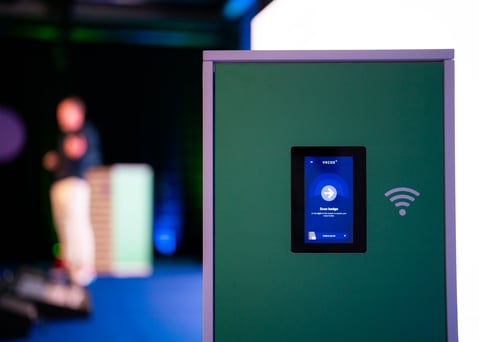
Each locker bank has a terminal with a touch screen where employees request or release a locker. The touch screen shows which locker has been assigned. Once they are done, with a few taps, the employee can also release their locker - making it instantly available for the next person.
3. Method of Operation (Access)
The access method is how the system recognises who is at the locker. This can be the Vecos app, a third-party workplace app, a company access card, or biometrics such as fingerprint or facial recognition. Any personal identification type is supported.
The moment the system recognises the employee, it adjusts automatically - applying the right access level, duration, and use case for that person. The access method is the trigger. The adaptation is instant.
4. Cloud-based Software
The software platform is the heart of Adaptive Workplace Storage. It connects lockers to the terminal, processes locker requests, and manages the entire system. But unlike smart locker software that pre-sets rules to specific lockers, the Vecos platform configures rules to people - applying them dynamically at the moment of use, not in advance.
The platform is cloud-based SaaS. It updates automatically to the latest software, functionalities, and security standards - multiple times a year, without replacing hardware or requiring manual reconfiguration.
5. Web-based Management Portal
The management portal gives Facilities teams real-time visibility across every locker, every site, and every location in the portfolio. This means they can see usage, availability, occupancy patterns, and activity levels, down to individual locker level.
Rules are set once in the portal and the system applies them automatically from there. No ongoing manual management is required.
Within this setup, per user group - employee teams, departments, visitors - Facilities team specifies access, duration, and eligibility directly in the portal. After that, the platform handles everything. Complete control, without ongoing manual effort.
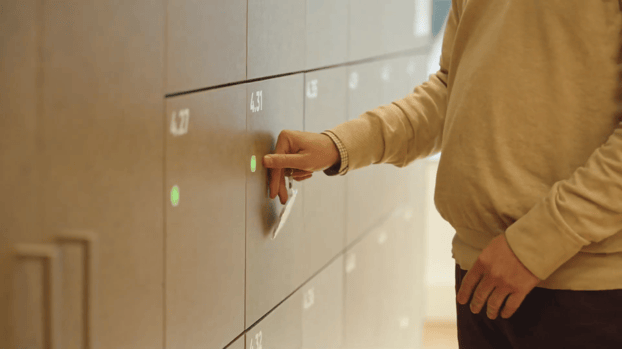
How Adaptive Workplace Lockers Work - using a Locker step-by-step
The experience for the employee is simple. The intelligence behind it is not.
Recognize.
The employee taps their badge, uses their app, or identifies via biometrics at the terminal. The platform instantly recognizes who they are.
Adjust.
Based on who they are, the system automatically applies the appropriate locker access level, duration, and use case. No manual steps. No configuration screens.
Deliver.
A locker opens. By a gentle press of the door, the employee is in. Upon closing, the locker remains assigned to them for the duration they need.
When the employee is done, they select 'Release' in the app or at the terminal. The locker is immediately available for the next person. Healthy turnover, automatically maintained.
Managing Smart Lockers
A customized setup
At implementation, the Vecos onboarding team creates a setup based on your organisation's specifications - locker ratios, user groups, access rules, and use case configurations. This is done once. After that, the system runs itself.
Users are organised into groups - teams, departments, visitors - and access rules are configured per group: where they can use lockers, for how long, and for what purpose. From that point, the platform applies those rules automatically to every individual at the moment they use a locker. No ongoing reconfiguration. No manual adjustments as needs change.
Personalised locker assignments and locker sharing are both supported - all configured once in the management portal, applied automatically from there.
Optimizing Locker Usage
After implementation, the platform continuously optimises locker usage based on real activity data - not assumptions. Usage patterns, occupancy rates, and turnover are tracked in real time. The system acts on that data automatically: extending active locker durations, notifying inactive users, and maintaining healthy availability without FM intervention.
Where FM input is needed - incorporating new services, adjusting policies for new locations, responding to changing workplace behaviour - the management portal makes it straightforward. Locker bank layouts are displayed visually, with intuitive controls. Remote management, from any location.
Conclusion
Hybrid working has changed how offices are used - and storage must change with it.
Adaptive Workplace Storage removes the need to predict behavior, manually allocate lockers, or constantly adjust rules as usage shifts. Lockers are assigned only when needed, held for exactly as long as required, and released automatically when no longer in use. Availability stays healthy. Turnover stays balanced. Friction disappears.
For employees, this means storage that simply works - whenever and wherever they need it.
For Facilities teams, it means control without coordination, visibility without micromanagement, and a system that continues to perform as workplace behavior evolves.
One platform.
All locker use cases.
Real-time adaptation - without ongoing manual work.